Personalized Reading, Language & Learning Support for Kids

From reading intervention and speech-language therapy to executive functioning support, handwriting, and early literacy, each service is designed to identify your child’s needs and build the skills that support confident learning.

Main Line Language & Literacy offers individualized therapy, literacy intervention, evaluations, and small-group enrichment for children from early childhood through middle school.

Rebecca reading a picture book with a young child

Reading, Language & Executive Functioning Support

A speech-language pathologist and a young child looking at a picture vocabulary book together
01

Orton-Gillingham-Based Reading Intervention

Build stronger reading and spelling skills, one step at a time.

Some children need reading instruction that is more explicit, structured, and individualized than a traditional classroom approach can provide.

Our Orton-Gillingham-based reading intervention uses structured, multisensory instruction to help students understand how letters and sounds work together and apply that knowledge to reading and spelling.

Depending on the child’s needs, instruction may address:

Phonemic awareness and sound-letter correspondence.

Phonics and decoding unfamiliar words.

Spelling and encoding.

Reading accuracy and fluency.

Vocabulary and reading comprehension.

Written language foundations.

Instruction is designed around the student’s current skills, with a focus on strengthening foundational reading abilities that support continued literacy development.

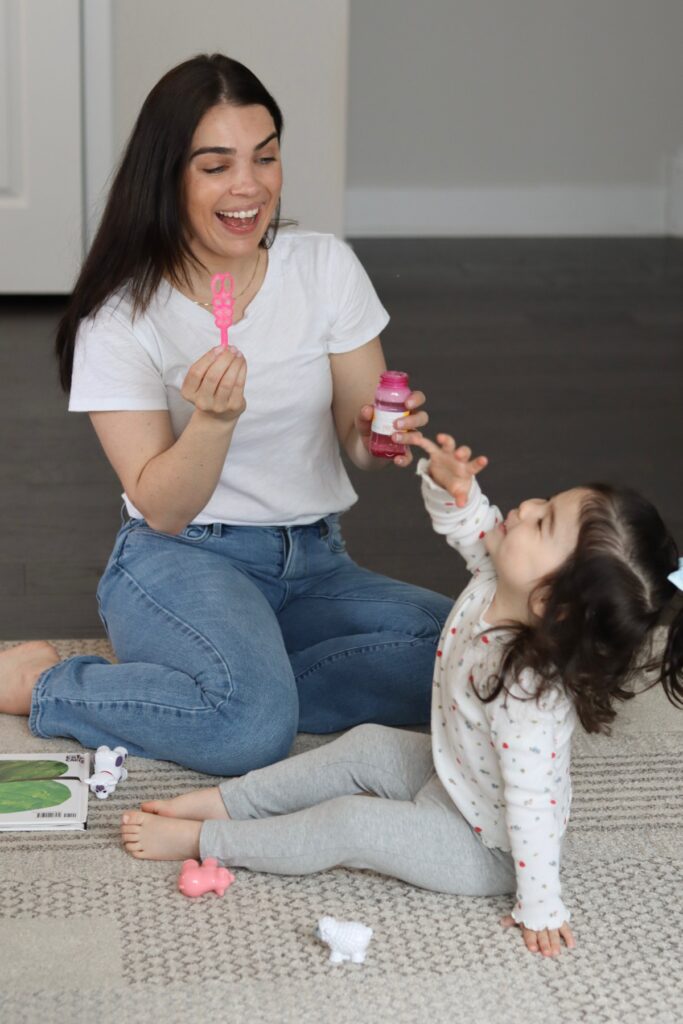
A therapist and a toddler laughing while blowing bubbles during a play-based session
02

Speech-Language Therapy

Strengthen the language skills behind learning and communication.

Language affects how children understand information, express their thoughts, follow directions, and connect with others. It also plays an important role in learning to read and write.

Individualized speech-language therapy supports children’s receptive language (understanding language) and expressive language (using language to communicate).

Depending on the child’s needs, therapy may focus on:

Understanding spoken language and following directions.

Building vocabulary and word retrieval.

Expressing ideas clearly and organizing thoughts.

Developing language skills that support reading comprehension and written expression.

Strengthening communication skills for classroom participation and social interaction.

Each plan is tailored to the child’s developmental level, strengths, and areas of need.

A girl writing in a planner at a table, with books and sticky notes beside her
03

Executive Functioning Support

Help your child organize information, approach tasks, and work more independently.

Executive functioning skills help children plan, organize, manage information, get started on tasks, and work toward a goal. When these skills are challenging, schoolwork and everyday routines can feel overwhelming.

Our support considers how executive functioning connects with language, learning, and communication.

Depending on the child’s needs, intervention may address:

Planning and organization.

Understanding and carrying out directions.

Organizing thoughts for speaking and writing.

Breaking larger tasks into manageable steps.

Developing strategies for approaching schoolwork.

Applying skills with increasing independence.

The focus is on building and practicing the skills that help children navigate learning more effectively.

A young child arranging wooden letter tiles while an adult points to one
04

Kindergarten Readiness & Reading Foundations

Give early learners a stronger start.

Early language and literacy skills provide the foundation for learning to read. Building these skills before and during the early school years can help children prepare for the demands of the classroom.

Kindergarten readiness and early reading support use developmentally appropriate, evidence-informed instruction to strengthen skills such as:

Alphabet knowledge and letter recognition.

Phonological and phonemic awareness.

Sound-letter correspondence and early phonics.

Early decoding and spelling.

Vocabulary and listening comprehension.

Language skills that support classroom participation.

Sessions are designed to help young learners build foundational skills through explicit, multisensory activities and purposeful practice.

A child carefully writing the alphabet on lined handwriting paper
05

Handwriting Support

Make writing more comfortable, legible, and efficient.

When handwriting is slow, difficult to read, or tiring, children may struggle to keep up with classroom tasks or get their ideas onto paper.

Handwriting support provides targeted, hands-on instruction to help children develop more efficient writing skills.

Sessions may focus on letter formation, legibility, consistency, writing speed, and the foundational skills needed for written work.

The goal is to help children write with greater ease and confidence so they can focus more of their energy on what they want to communicate.

Evaluations & Assessments

Elementary through middle school

Language & Literacy Evaluations

Understand your child’s strengths and pinpoint areas of need.

When reading, writing, or language difficulties persist, a comprehensive evaluation can help clarify which skills are developing as expected and where additional support may be beneficial.

Language and literacy evaluations are available for elementary- through middle-school-aged children and examine relevant areas of receptive and expressive language, reading, and writing.

The process is designed to provide a clearer picture of your child’s learning profile, including strengths, areas of difficulty, and recommended next steps.

Following the evaluation, you’ll receive a detailed report and have an opportunity to review the findings and discuss recommendations.

Birth through age five

Early Language Assessments

Understand your young child’s communication development.

For children from birth through age five, an early language assessment can help families better understand how a child is developing receptive and expressive language skills.

The assessment considers your child’s current abilities, identifies areas that may benefit from support, and helps guide recommendations for individualized therapy when appropriate.

Early language assessments can also help families explore additional support alongside services provided through early intervention or preschool programs.


Small-Group Enrichment

Reading Ready

Build early reading skills with a small group of friends.

Reading Ready is a summer literacy enrichment program for families who would like their children to build early reading skills together in a fun, supportive setting.

Groups are formed by family request, with up to four children per group. Sessions meet once a week for six weeks and focus on foundational literacy skills through structured, engaging activities.

It’s an opportunity for young learners to practice important early reading skills, build confidence, and prepare for the next stage of their literacy journey alongside familiar peers.

Four young children sharing a picture book on a rug

Small groups of up to four children.

Groups formed by request.

One session per week for six weeks.

No evaluation required to participate.

How to Get Started

1

Free Consultation

Reach out by phone or email to share your concerns, ask questions, and explore which service may be appropriate for your child.

2

Evaluation & Recommendations

When an evaluation is recommended, we’ll look at your child’s strengths and areas of need, review the findings together, and discuss potential next steps.

3

Individualized Support

If therapy is recommended and you choose to move forward, we’ll develop a plan based on your child’s needs, with ongoing communication and practical strategies to support skill development.

Group enrichment programs, including Reading Ready, do not require an evaluation.

Not Sure Which Service Is Right for Your Child?

You don’t need to have all the answers before reaching out. Let’s talk through your concerns and determine a helpful next step.

Rebecca Gilligan smiling at her desk